
Is It Possible To Restore Hair With Natural Growth Factor Injections

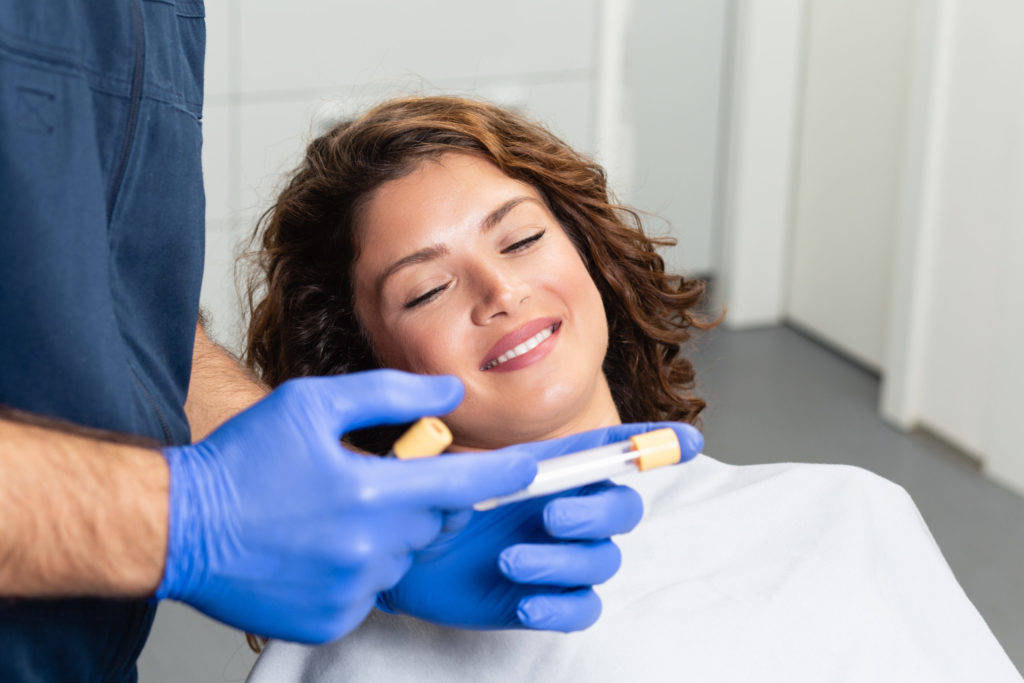
Many of us are concerned about our hair, and it is a realistic concern seeing that, on average, 85% of men experience a male-pattern degree of baldness. Our hair is a part of who we are, and it is an integral part of our appearance, so if it does thin or falls off, many understandably feel insecure and self-conscious. Fortunately, all hope is not lost yet; a non-surgical treatment called�natural growth factor injections�promises to restore your hair.� Hair loss can be caused by stress, medications, hormonal changes, and genetics. You can perhaps avoid many of these potential causes, but there is no growing them back naturally once hair loss is there. The only method left to restore your hair is non-surgical or surgical procedures.� Many are not comfortable with surgical procedure prospects. So naturally, many researchers look to restore hair without dissecting the skin to fill the demand. They’ve come up with natural growth factor injections, but is it as effective as they claim? To know more about it, continue exploring the blog.� What Are Natural Growth Factor Injections? Natural growth injections use your body’s healing processes to regrow your hair. Medical experts fully understand how we can heal ourselves in sicknesses and injuries. Using that knowledge, your provider will use those healing properties to regrow your hair.� The treatment is based on the platelet-rich fibrin (PRF) approach. The injections stimulate new growth by awakening the dormant hair follicles through the PRF approach. The hair follicles are simply dormant, and the older you get, the more dormant they become.� That’s why natural growth injections are best used in the early stages of hair loss. The treatment is effective for men and women, and it is also a good alternative for those who don’t want to take medications for hair restoration.� So what exactly is the PRF approach, and how does it help with hair restoration?� What is PRF? Platelet-rich fibrin (PRF) is a method that can help accelerate the healing process. Not only is it effective in hair restoration, but it also has practical applications in medical applications. Its healing and hair restoration properties are thanks to the fibrin and platelets, hence the name.� Fibrin And Platelets Fibrin is a protein quickly produced when the body notices damages like injuries and wounds. These proteins are sturdy enough to arrange themselves in a lengthy continuous net-like structure. This protein is produced by another protein called fibrinogen, a protein that is floating freely around in your blood’s plasma.� The purpose of fibrin constructing these net-like structures is to catch and entangle platelet. Platelets are also cells that float freely in your blood plasma, and they are the smallest cells in the bloodstream. They are even smaller than the blood cells.� These platelets flow along with the bloodstream, and if any damage occurs, they drift towards them. The fibrin then responds to the damage by catching the platelets. Together, they create blood clots and deliver the necessary proteins to heal the body.� However, these proteins don’t naturally reach your hair scalp to awaken dormant hair and induce regrowth. To access these proteins, we have to extract them.� Extracting PRF Both fibrin and platelets only exist in your plasma within the bloodstream. Your provider will use the injection and a centrifugal machine to extract these proteins.� The first step is the injection, and your provider will extract a small amount of blood from you. Not too much blood, just enough to fill a vial. However, we may need a bit more than that, depending on your needs.� Next, the vial of blood will be placed into the centrifugal machine. The machine then spins, which will separate the blood cells, plasma with platelets and fibrin, and the white blood cells. The spin roughly takes around 10 minutes.� After the spin, you can see the difference between the cells with your naked eye. The blood is separated into three sections: blood cells at the bottom, the white blood cells at the middle, and plasma filled with platelets and fibrin at the top, which has a yellowish golden color. Your provider will then extract the plasma with a very fine 32 gauge needle.� Applying Natural Growth Factors With Injection Now that we have successfully extracted the PRF, your provider will inject these PRF solutions back into your body, but this time on your scalp. The injections can be as many as 60 shots, only applying a small PRF per site. The PRF then awakens the dormant hair, making them active and regrow again. How and why it activates dormant follicles isn’t precisely known yet, but researchers think that PRF addresses androgenetic alopecia, which is the hormone that causes hair loss.� What Happens During The Procedure?� Hair restoration through natural growth factors is reasonably straightforward, requiring only three steps. However, the procedure may differ from clinic to clinic, but generally, you can expect during the procedure:� Your provider will extract a small amount of blood from you, typically from the arm. Next, they will transfer the blood to a vial and place it on a centrifugal machine.� The machine separates the different blood cells to get a high concentration of PRF. The spinning will take at least 10 minutes, so meanwhile, your provider will clean the scalp to prepare for the injections.� After spinning, they will extract the PRF, a yellowish golden color. Other blood components are not needed for the treatment. Your provider will then apply the PRF to the scalp.� As you can see, it’s quick, easy, hassle-free, and painless. Perhaps injections are not your strongest suit, but they are still a better alternative than surgical treatments. In approximately three months, you will start seeing the results. Hair regrowth will be thicker and, even in some cases, darker.� Takeaway If you are concerned with hair loss, you can do something about it by trying out natural growth factor injections. So if you are interested,�contact�and reach out to our clinic,�Aiyana Aesthetics. We offer�services�that help our clients
Healing of scars: Understanding Natural Growth Factor Injections
Healing of scars: Understanding PRP Your doctor�may have recommended you take PRP or platelet-rich plasma therapy to improve the Healing of scars of any ligaments, muscle, joints, or injured tendons. Through PRP injections, the treatment uses the patient’s healing system to increase the progress of musculoskeletal problems. If you’re one of those who worries about the difficulties mentioned, understanding PRP, in general, is essential. So, let’s discuss in this article all the details that you need to know about PRP or platelet-rich plasma before you undergo this procedure.� What is platelet-rich plasma? Right before we dig deeper into how platelet-rich plasma works and its benefits, knowing something about PRP in detail will be an advantage. Let’s get started with platelets. Platelets are tiny blood cells that support your body system with the clotting process. So, if one of your blood vessels gets injured, this gives out signals to the platelets.� Also, these cells have unique proteins known as “growth factors” that help with the curing process. By this name, platelet-rich plasma was developed. It is because of the mixture of a colorless fluid found in the blood known as plasma with much more growth factors and a higher combination of platelets than seen in the blood.� For instance, platelet-rich plasma treatment has been beneficial first to athletes that need support in speeding up their injury-healing process. Nowadays, PRP is not only used for this matter. These injectables are also utilized for cases where a patient needs help encouraging healthy cell growth, regeneration, and healing of tissues.� An example includes the elimination and minimization of scar tissues. So, if you’re new to how platelet-rich plasma works, its process can help you heal those scars. Let’s go beyond this matter and know-how this treatment could help you have smoother, healthier, and good skin after an injury.� PRP in Minimizing Scars So, the question is, how do PRP injections help you in minimizing those scars? Scar therapy with PRP injections eliminates all spots by restoring epidermal cells called and connective tissue cells. In general, the helpful growth factors in platelets support the production of new blood vessels as it restores tissues, resulting in a better texture of your skin. When these cells are generated in larger quantities, new collagen is made. In case you don’t know, collagen is the amplest protein in the human body. In essence, one of its roles is to produce healthy new skin to your body, replacing the damaged scar tissue as it grows. Therefore, within the process, your skin with the rejuvenated area makes all those scars less noticeable than before.� PRP Benefits With the expected benefits of PRP eliminating those scars and healing those muscle injuries, what else can you expect to have PRP? Let’s take a brief overview of some of its benefits.� It is safe Of course, no one would ever want to take a treatment that is not safe to test on. The good thing about PRP, in general, is that it is deemed as a safe procedure. Suppose you ask why it’s all because your blood is utilized to prepare the PRP mixture. What’s more, you may appreciate PRP treatment if you are not fond of more invasive cosmetic surgeries.� Though results may be progressive, people who undergo scar therapy with PRP are satisfied with the results. Some patients would also do follow-up treatments to get their desired outcome. But, take note that having PRP injections can still give you the best results, so there’s nothing to be worried about this matter.� Provides total rejuvenation PRP treatment renews elastin and collagen production, which tightens thinning and thickens skin, easing fine lines and wrinkles. It boosts collagen; it is one of the best therapies to enhance overall tone and skin texture. Some experts and professionals would also recommend it to people who have acne or rosacea.� Long-Lasting Support PRP results can be seen from three to four weeks after treatment. But, expect that the outcomes are long-lasting which can continue from twelve to eighteen months after consecutive treatments. You can always go with your trusted healthcare provider to check your progress and ask for some tips as well. All Natural Ingredient Again and again, PRP is a safe procedure not only because it uses a sample of your blood but because it’s a natural element from you without any foreign products.� It Heals Areas That are Hard to Reach Lastly, of all treatments, PRP is considered an effective treatment for healing areas that are challenging to treat. This part includes regions under the eyes where patients often see the signs of aging first but where no laser can be applied.� Number of PRP Sessions To Take The number of treatment sessions will depend on various factors. It involves the type of injury the skin causes, the scar to grow, its nature, the location, and many more.� Some people would only have one up to three sessions and then get the results that they wanted to achieve. The first step is to consult everything with your healthcare professional and visit the clinic for a better assessment or evaluation. Being guided by your doctor will always be the best practice to do before taking any procedure. Remember that you don’t want to make any mistakes when your health may also be at risk in the therapy.� The Best Candidates for PRP Treatment The ideal patients for the PRP treatment are the ones who suffer from chronic pain with joint degeneration triggered by osteoarthritis. Candidates for PRP can also be those who have recurring soft-tissue injuries with their bodies.� On the other hand, platelet-rich plasma injections are not suitable for people who have a medical condition. Such instances may increase or worsen your situation, like a metastatic disease, an active infection, or specific skin problems. Patients who also have blood and bleeding disorders can not take the PRP treatment.� Should you take PRP? Yes, if needed and no, if there are some remedies that you can